
By VNOVO Technical Support Team
May 10, Fuding, Fujian Province.
The 2026 World Humanoid Robot Games officially kicked off — the domestic debut was set in a tea mountain, where humanoid robots worked alongside human tea farmers to produce tea.
Not a performance. An assessment.
Tea making looks simple — spreading the leaves thinly, rolling steadily, baking evenly — but each step places nontrivial demands on hand force control. For a robot to hold its ground in this process, the dexterous hand must pass this test.
Honestly, the development speed of dexterous hands has been rapid lately.
Several leading manufacturers’ production capacity has been surging since the beginning of the year, with monthly output jumping from a few hundred units to several thousand units. Supply chain upstream and downstream are all expanding production. Booming demand is a good thing — but problems have followed.
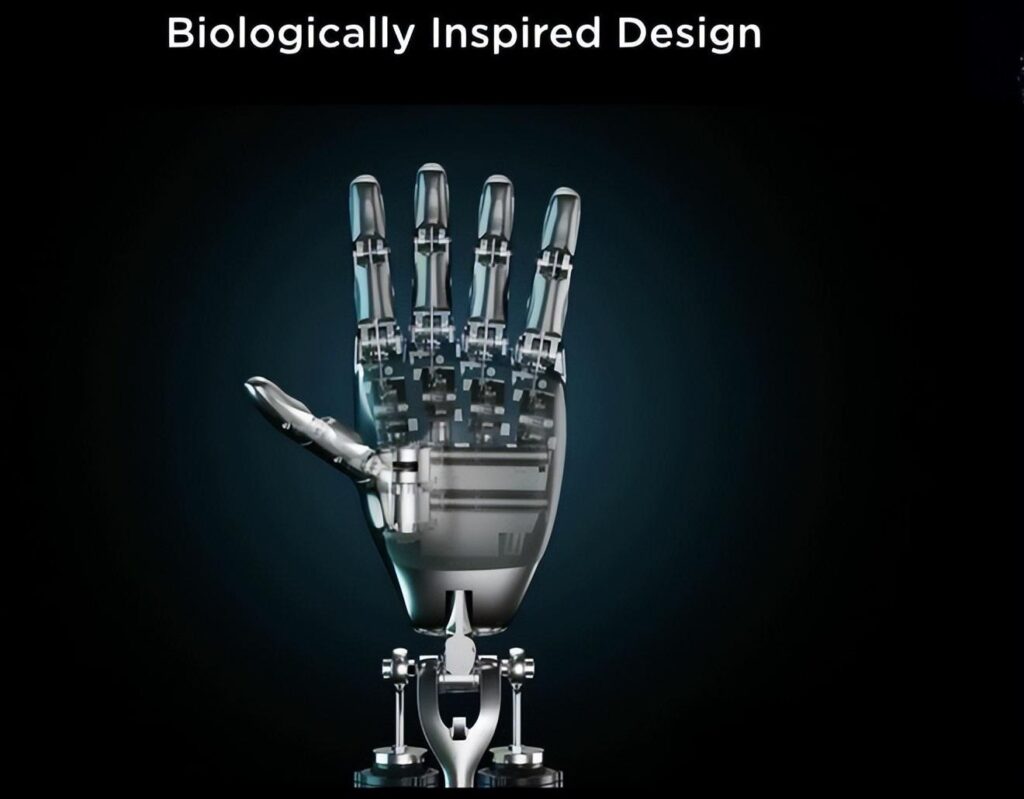
Inside the planetary reducer, one detail is easily overlooked
Each finger joint in a dexterous hand contains a micro planetary reducer, smaller than a fingernail. These reducers operate at high speed with frequent starts and stops, with gears constantly under high-frequency impact loading.
The problem lies in lubrication.
Manufacturers have reported that after just two to three months of operation, joints began producing abnormal noise. Upon disassembly, the grease inside the planetary reducer had already turned black — the color changing from light yellow to dark brown, with gray-black marks also visible on the tooth surfaces.
Blackening of grease is essentially oxidation. Ordinary mineral oil-based greases are prone to cracking at operating temperatures of 80 to 100°C. Oxidation products of the base oil react with additives, causing color darkening, viscosity increase, and oil film thinning. Under prolonged conditions of insufficient oil film, gear wear accelerates progressively.
More critically, the compact space in dexterous hand joints means limited grease fill volume. Under high-temperature centrifugal force fields, oil is easily separated and flung out of the gear mesh zone. Once the oil film fails to establish itself, micromotion wear appears at stress concentration points on the tooth root, accumulating into cracks over time.
This is not a problem that can be solved simply by switching to a different lubricating grease — but choosing the wrong lubricating grease will certainly accelerate the onset of problems.
What X500 can do
Perfluoropolyether (PFPE) base oil is the core of X500. With an operating temperature range of -90°C to +250°C, it exhibits no reaction with oxygen, ozone, or acidic/alkaline media, and its oxidation stability far exceeds that of mineral oils. This temperature range means that even when dexterous hand joints operate continuously in high-temperature summer environments, the base oil is not prone to thermal cracking or degradation.
PTFE as a thickener has an extremely low friction coefficient, allowing it to form a solid lubricant layer on metal surfaces in the instant when the oil film has not yet been established during gear startup — avoiding direct metal contact at the tooth root. PTFE and perfluoropolyether have natural affinity, giving the formulation good stability and no oil separation during long-term use.
Together, these two characteristics mean that X500 delivers significantly longer service life than ordinary lithium-based greases in dexterous hand planetary reducer operating conditions. Joint maintenance intervals extend, and the frequency of Complete machine shutdown for inspection naturally decreases.
A final word
Scaling up robot hand production is a good thing. But once you reach volume, any minor oversight gets multiplied. Lubrication seems small — but when problems arise, the entire machine must stop. Getting it right early saves far more trouble than fixing it later.
Where do you think the most common problems arise during dexterous hand mass production?
A. Incorrect lubricating grease selection
B. Assembly cleanliness not properly controlled
C. Testing cycle compressed too short
D. Other — let’s discuss in the comments